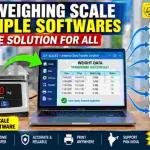
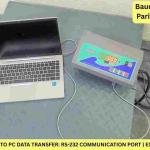
Weighing Scale Data Transfer Software: One Solution for Tally, ERP, Excel, Word, Web & PLC
Transfer weighing scale data directly to Tally, ERP, Excel, Word, web applications and PLC systems with a customized solution from U.P. Scales.


Weighing in explosive environments? Standard scales can kill. Learn what makes a scale intrinsically safe, understand ATEX/IECEx certifications, and choose the right protection for hazardous areas.
I'll never forget the plant manager who showed me a "perfectly good" industrial scale they'd been using for years in a chemical mixing area. The scale worked fine. The problem? It wasn't rated for the environment. A single electrical spark from that scale—from a motor, a switch, or even static buildup—could have ignited the solvent vapors in the air and leveled the building.
In hazardous areas, a scale isn't just a measuring device. It's a potential ignition source. And in industries dealing with flammable gases, vapors, dusts, or fibers, the consequences of choosing the wrong equipment are catastrophic.
This guide isn't about features or cost savings. It's about survival, compliance, and moral responsibility.
A hazardous area is any location where a potentially explosive atmosphere is or may be present in sufficient quantities to require special precautions. Common examples:
A standard electronic scale contains numerous potential ignition sources:
In a hazardous area, any of these can be the spark that triggers a disaster.
There are three main strategies for making equipment safe in hazardous areas:
The Principle: Limit the electrical and thermal energy to a level below what's required to ignite a specific hazardous atmosphere.
The Principle: Contain the explosion. If flammable gas enters the enclosure and ignites, the enclosure is strong enough to withstand the pressure and prevent the flame from escaping to ignite the surrounding atmosphere.
The Principle: Apply additional measures to prevent the possibility of excessive temperatures, arcs, or sparks occurring in the first place.
Most industrial scales for hazardous areas use a combination of Intrinsic Safety (for the load cells and low-power circuits) and Increased Safety or Explosion-Proof enclosures for the indicator.
You'll see these acronyms on certified equipment. They are not optional; they are legal requirements in most jurisdictions.
| Certification | Region | What It Means |
|---|---|---|
| ATEX | European Union | Mandatory certification for equipment used in explosive atmospheres within the EU. Derived from the French term ATmosphères EXplosibles. |
| IECEx | International | Globally recognized certification system based on IEC standards for equipment used in hazardous environments. Widely accepted worldwide. |
| NEC / CEC (Classes & Divisions) | North America | Standards defined by the National Electrical Code (USA) and Canadian Electrical Code. Hazardous areas are classified into Classes (I, II, III) and Divisions (1, 2). |
| NEC / CEC (Zones System) | North America (Adopted Standard) | Increasingly aligned with the international Zone classification system: Zone 0, 1, 2 for gases and Zone 20, 21, 22 for combustible dusts. |
This is the most common system globally and increasingly in North America.
For Gases, Vapors, Mists (ATEX/IECEx Zones):
| Zone | Hazard Level | Description |
|---|---|---|
| Zone 0 | Continuous Risk | Explosive atmosphere present continuously or for long periods. Highest risk area. Equipment must be Category 1 / Zone 0 certified (rare for weighing scales). |
| Zone 1 | Likely Risk | Explosive atmosphere likely to occur during normal operation. Common installation area for Explosion-Proof / Ex-certified equipment. |
| Zone 2 | Unlikely Risk | Explosive atmosphere not expected during normal operation, but if it occurs it will exist only for a short time. Least stringent safety requirements. |
For Combustible Dusts:
| Zone | Hazard Level | Description |
|---|---|---|
| Zone 20 | Continuous Risk | Combustible dust present continuously or for long periods. Highest risk dust environment. |
| Zone 21 | Likely Risk | Combustible dust likely to occur during normal operation. Explosion-protected equipment is typically required. |
| Zone 22 | Unlikely Risk | Combustible dust not expected during normal operation, but if it occurs it will exist only briefly. Lowest risk dust zone. |
The equipment marking will look something like: Ex ib IIB T4 Gb
Q: Can I use a standard scale if I put it in a sealed box?
A: Absolutely not. A sealed box does not make a device intrinsically safe. You need certified equipment designed, tested, and approved for the specific hazard.
Q: Can I modify a standard scale to make it safe?
A: Never. Any modification voids any certification and creates an unknown risk. Only use equipment with valid certification from the manufacturer.
Q: Do I really need this for occasional solvent use?
A: Yes. Regulations don't have "occasional" exceptions. If the hazard exists, even intermittently, the area must be properly classified and protected.
Q: Are intrinsically safe scales more expensive?
A: Yes, significantly. The engineering, testing, certification, and specialized components add cost. Consider it the price of safety and compliance.
In hazardous areas, there is no compromise. The scale you choose must be properly certified for the specific zone, gas group, and temperature class of your environment. This isn't about features or price; it's about ensuring that every worker goes home safely at the end of their shift.
When lives and livelihoods depend on it, only certified equipment belongs in your facility.
Operating in a hazardous environment? Don't guess. Consult Our Hazardous Area Specialists to select the right certified scale for your Zone. Explore our range of ATEX & IECEx Certified Scales for Zone 1, Zone 2, and dust applications.
Original Source: https://upscales.buyweighingmachine.com/blog/intrinsically-safe-scales-weighing-safely-in-hazardous-explosive-environments
Transfer weighing scale data directly to Tally, ERP, Excel, Word, web applications and PLC systems with a customized solution from U.P. Scales.
Need reliable general-purpose laboratory balances? U.P. SCALES, authorized dealer of Aczet, offers CG-L precision balances, CG-N counting scales, CG-S stainless steel scales, and CG Series table top balances. Pan India delivery & installation.
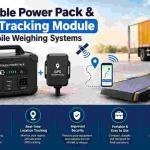
In today's dynamic industrial landscape, weighing operations are no longer confined to fixed locations. Field service teams, mobile inspection units, logistics fleets, and temporary production sites all require weighing systems that can travel with them.